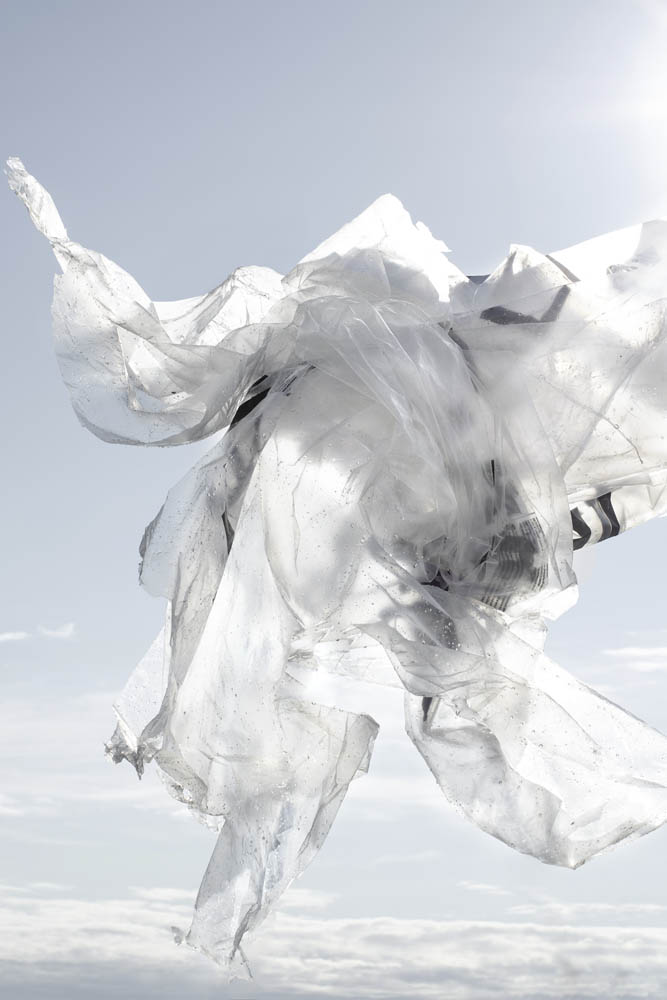
In her Heritage series, photographer Marjolijn de Groot turns items of everyday consumer waste into disturbing visual presences. Staged against backdrops of earth, sky and sea, her work explores the lasting impact our lifestyles leave on natural landscapes.
What traces do our most commonplace behaviours leave behind? A torn piece of packaging, a sheet of plastic carried off by the wind, or a piece of cardboard tossed by the roadside: this is the type of familiar detritus around which Marjolijn de Groot builds her compositions. In her Heritage series, the artist ponders objects which are designed to be ephemeral but whose presence endures long after they have been used.
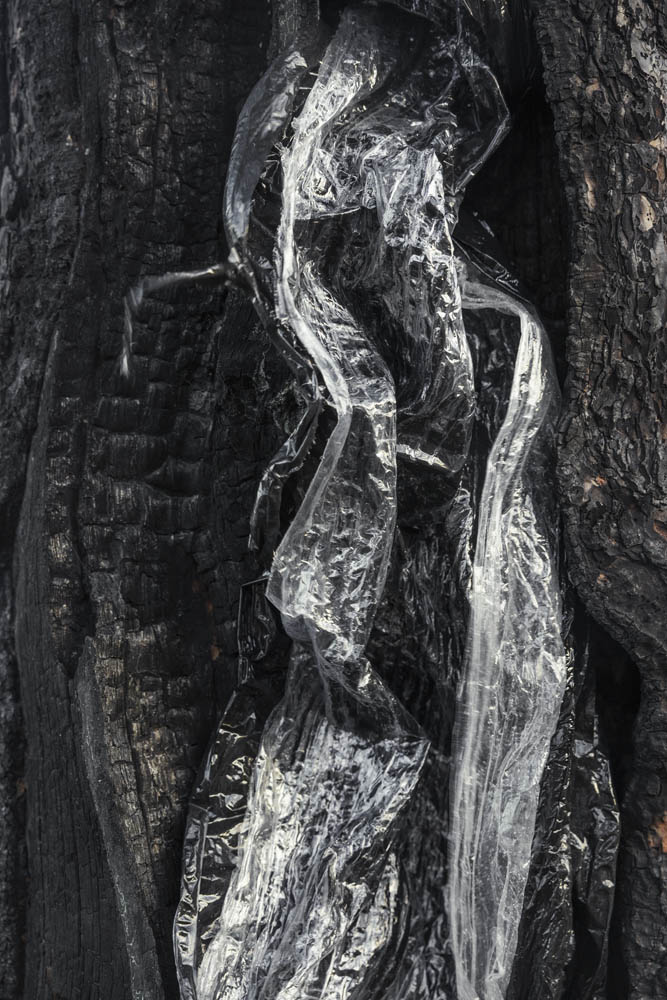
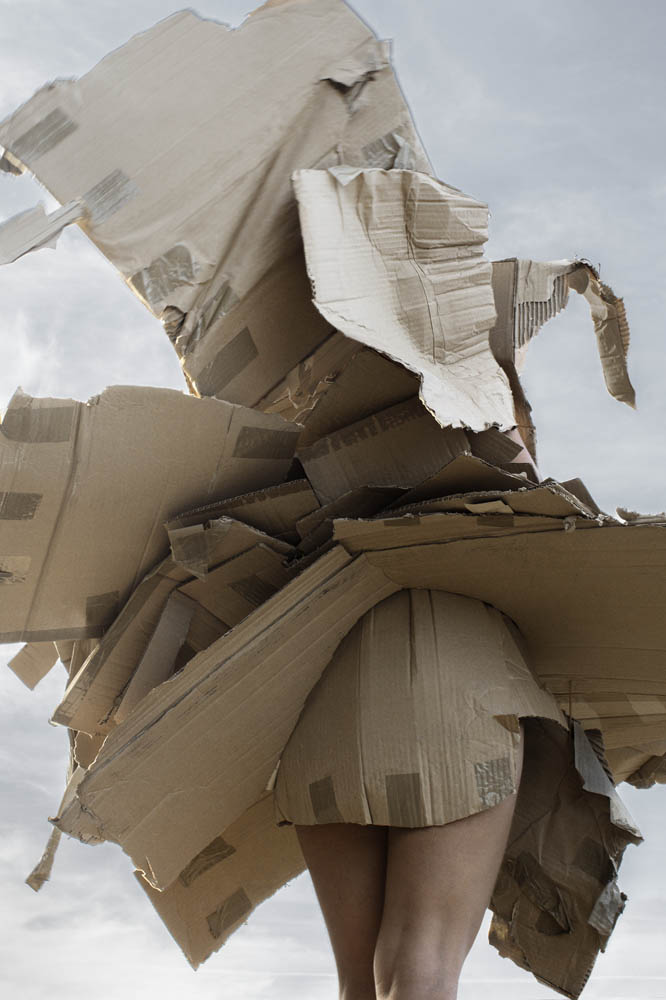
The project emerged from a simple observation: society produces more waste than items designed to endure. Far from adopting a detached or moralising stance, the photographer includes herself in this reality: “This work stems from a position of involvement”, she stresses, aware that she is participating in the same cycle of consumption as the one she observes.
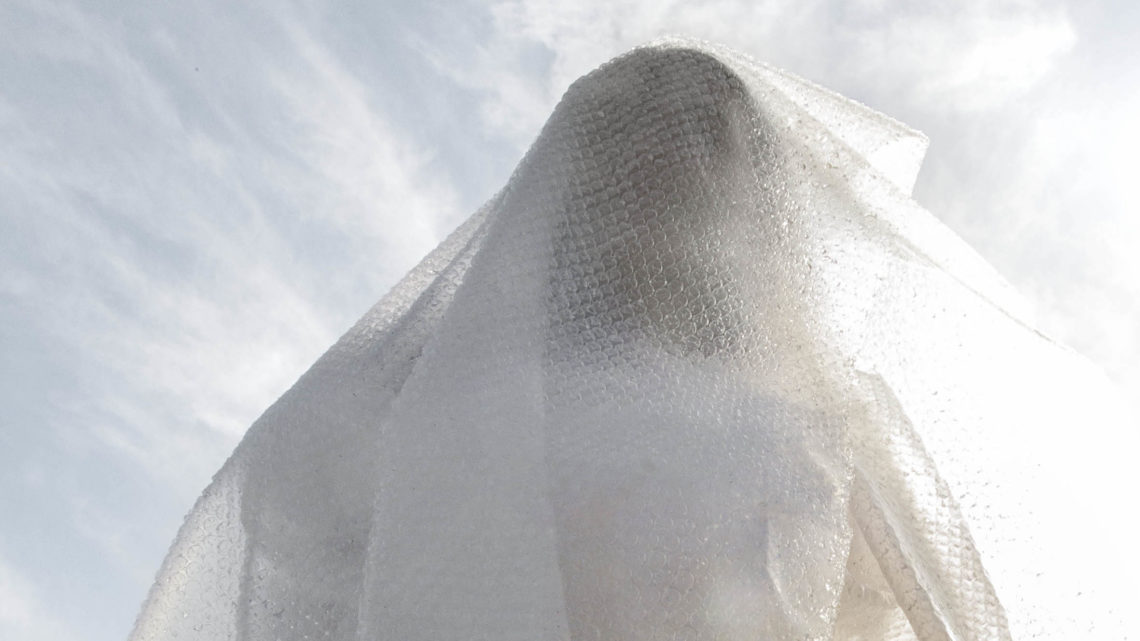
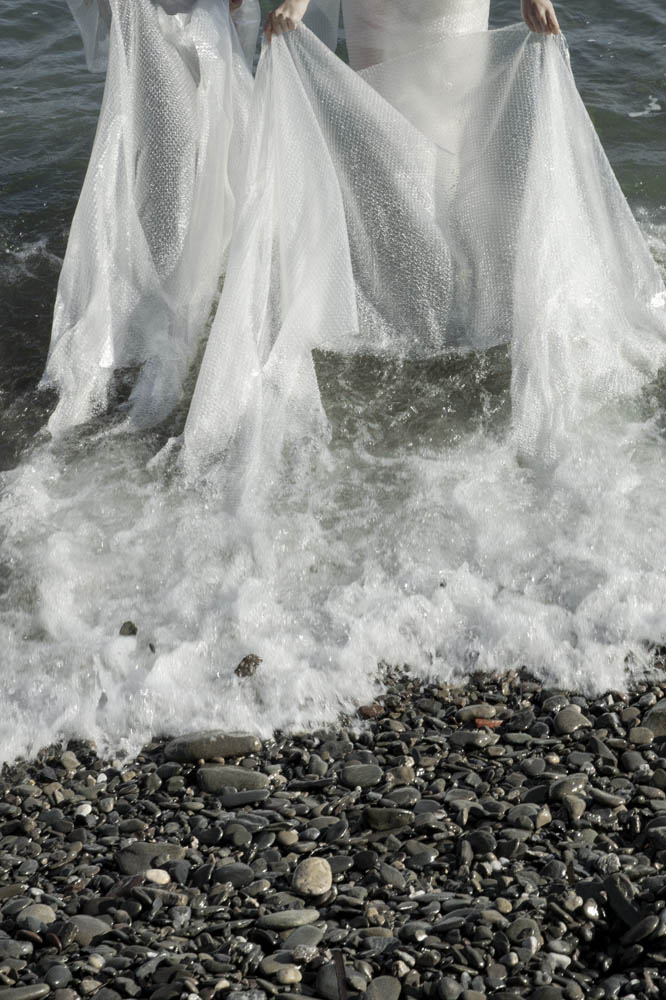
Produced over several visits to the Mediterranean coast, between the towns of Banyuls-sur-Mer and Cerbère, the series was based on a meticulous and delicate process. Marjolijn de Groot collects abandoned packaging items from around the landscape, then invites people she meets locally to pose for the compositions. Transparent plastics, black bags, cardboard boxes and protective netting shed their utilitarian function to become photographic subjects.
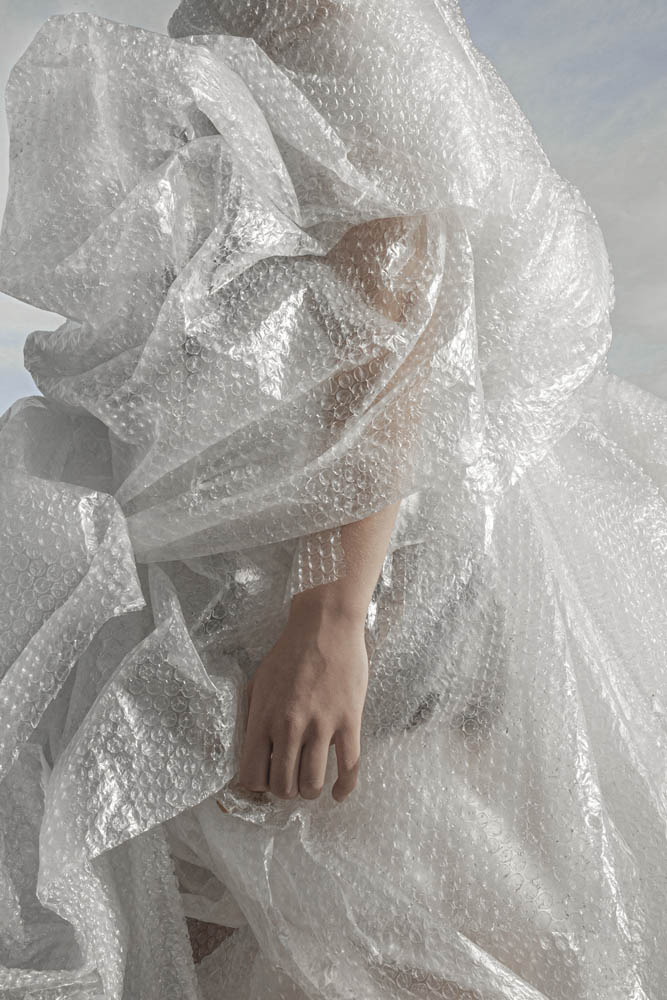
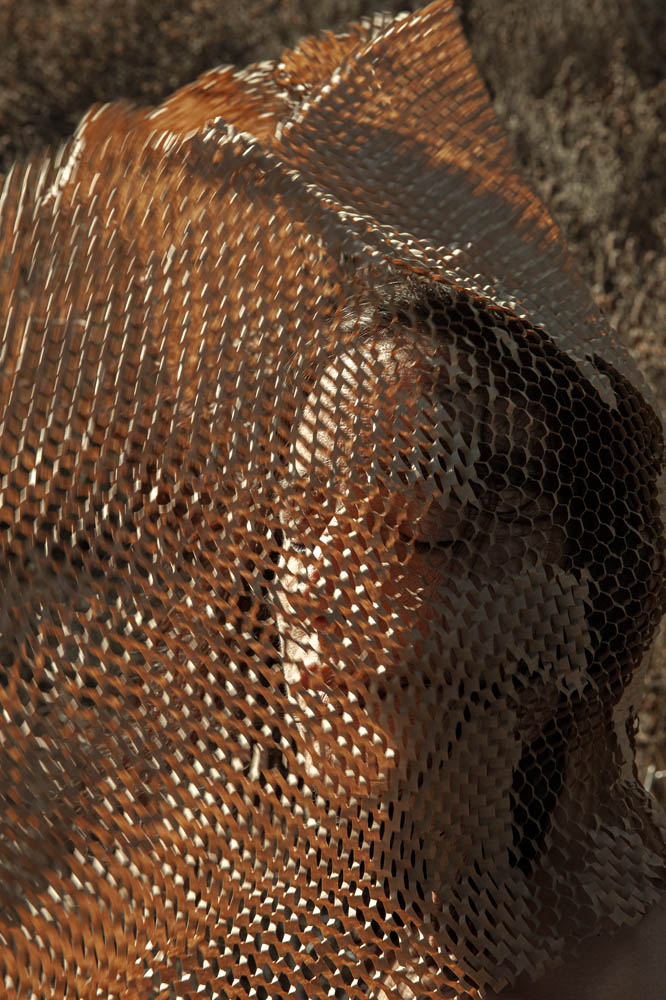
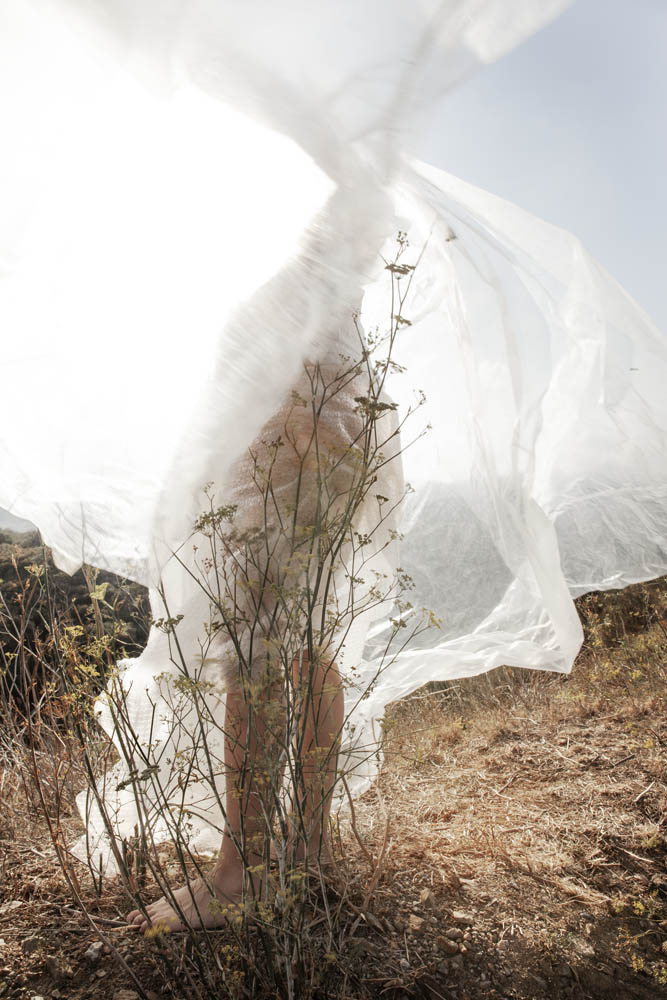
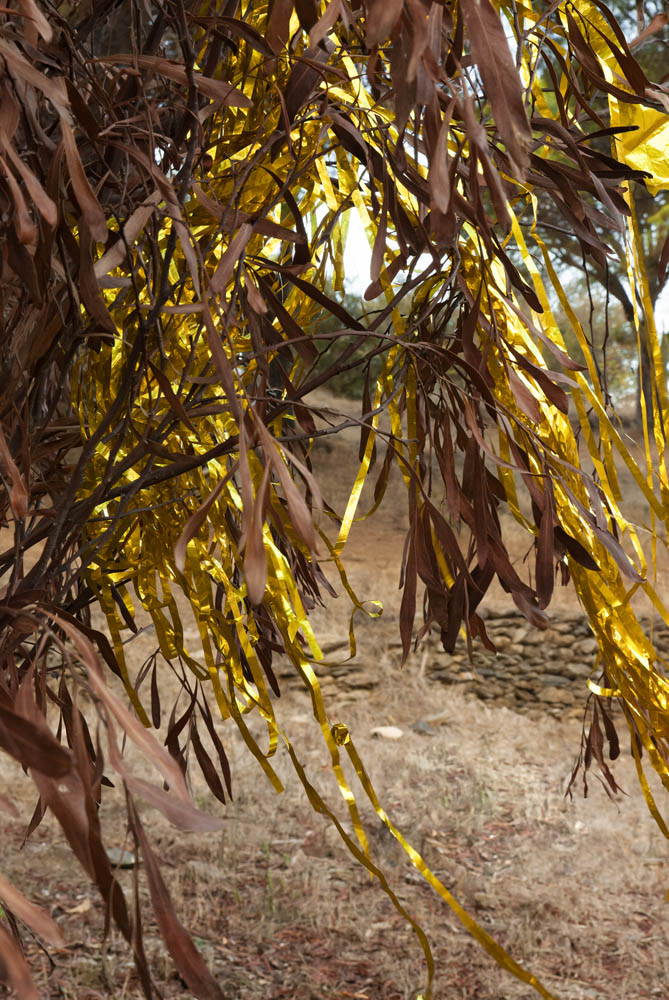
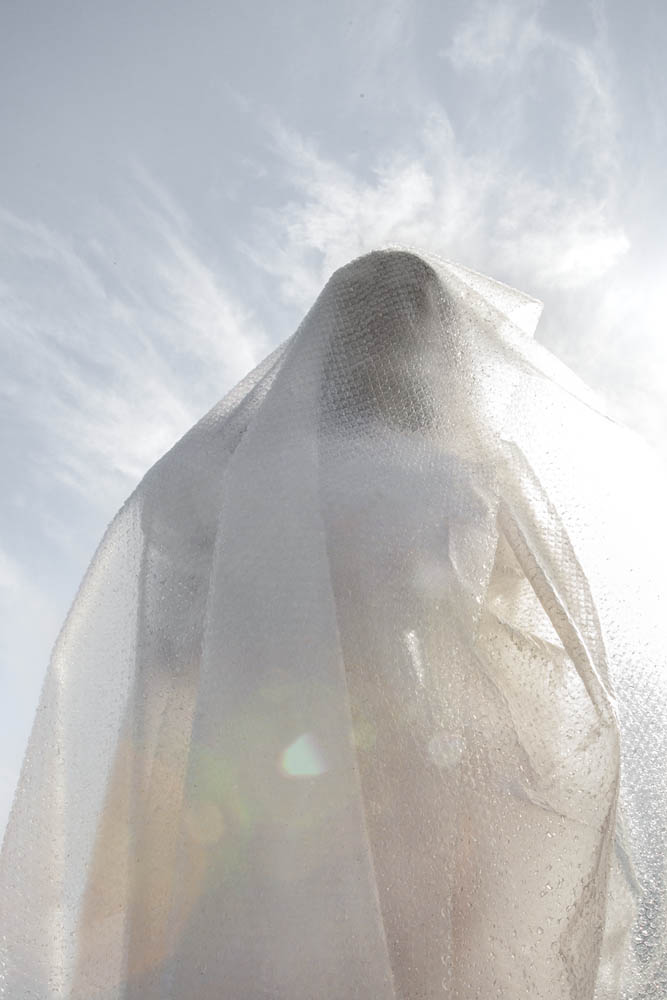
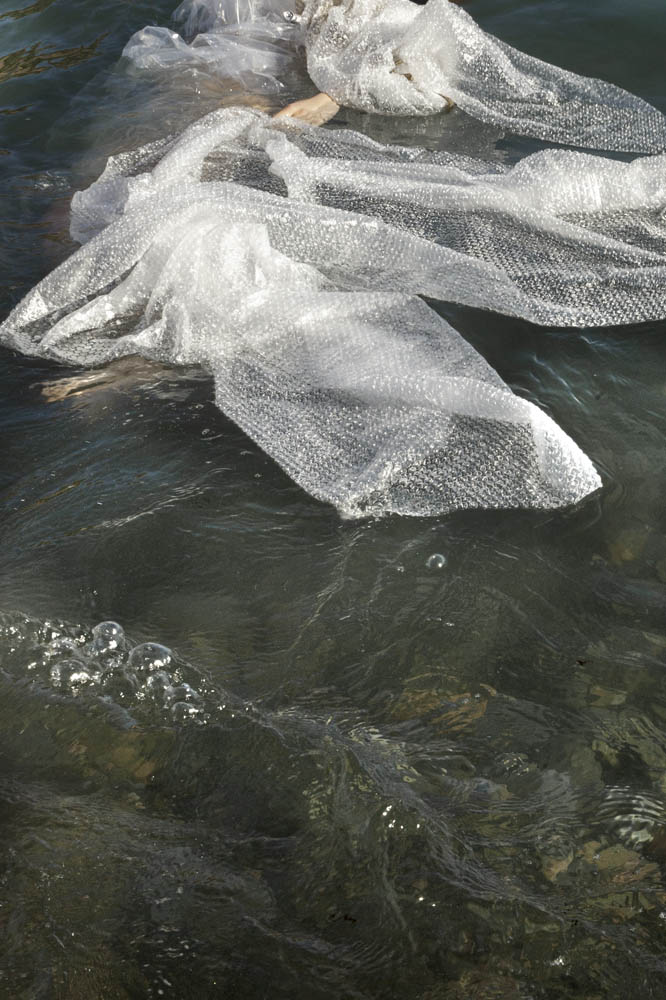
Under the photographer’s gaze, these materials take on a new status. They are transformed into sails, envelopes or floating silhouettes. Bodies appear and fade among translucent layers, as the litter seems to come alive, moving with the water, the wind or the light. This sense of ambiguity is one of the project’s greatest strengths. The images draw in the eye with their visual aesthetics, before revealing their true subject, and this tension is something the artist plays with freely. The beauty does not soften the subject matter; rather, it helps make it visible. Discarded materials take on a new presence when they are reframed within natural environments. Plastic film merges with sea foam, or with bark; bubble wrap on the surface of the sea reflects sunlight just as the water does; fragments of cardboard extend the mineral texture of the ground at our feet, blurring the lines between the artificial and the living.
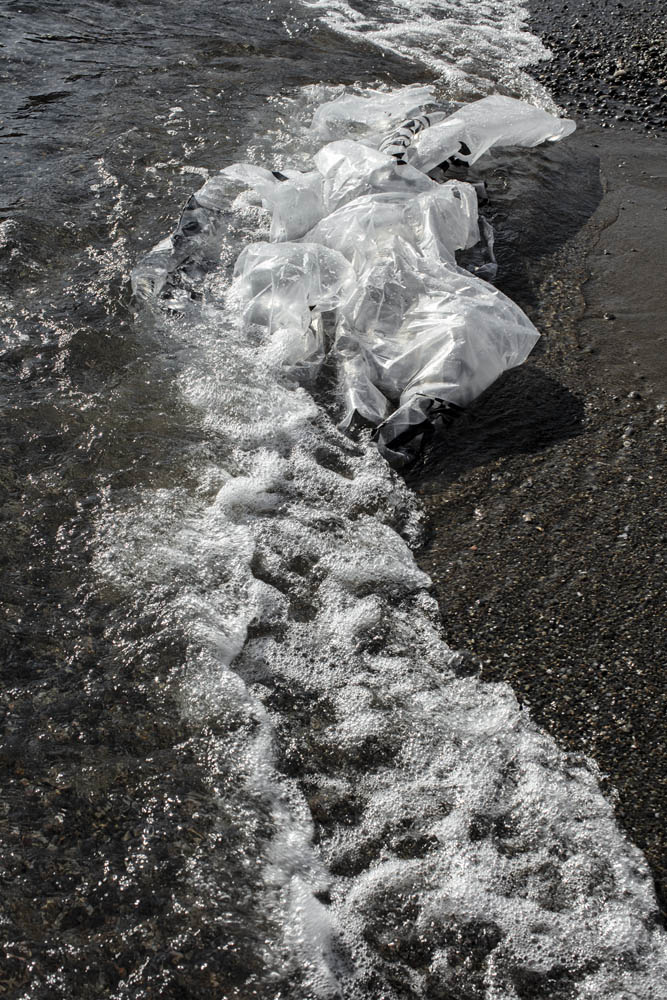
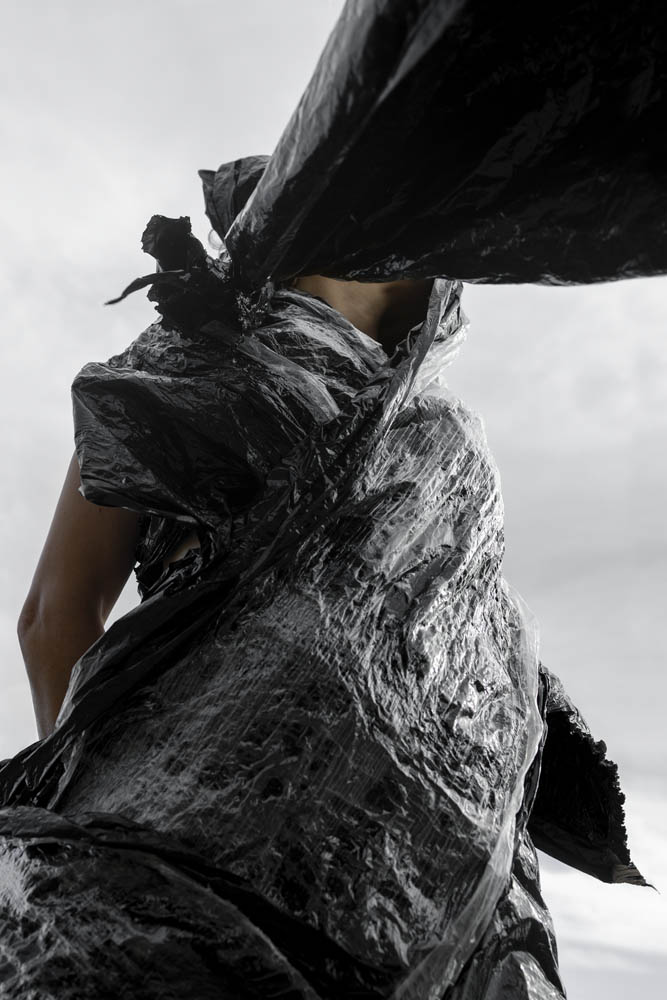
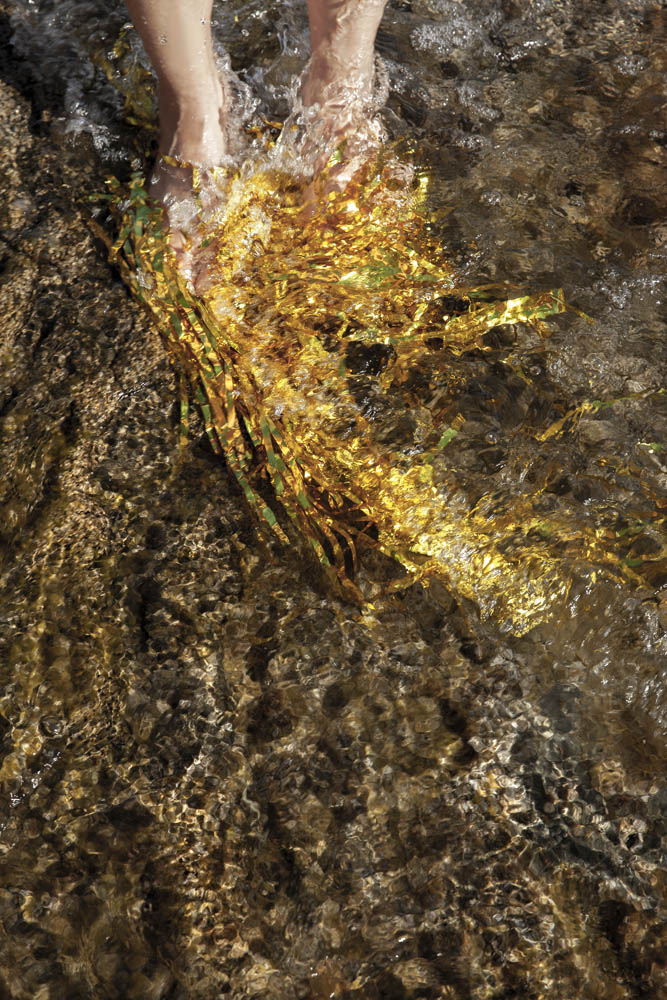
This approach invites the viewer to reflect on the different time scales that coexist within our environments: very short periods of use contrast with the much longer span of time required for items to degrade. Some materials will disappear within a few months; others will endure for decades or even longer, but they all reflect the same mindset of producing, then forgetting.
Rather than a simple indictment, Heritage offers a shift in perspective. Waste is no longer seen simply as an undesirable element, but as a material witness to our era. These scraps become the vestiges of a present whose consequences will continue to shape future landscapes.
By taking items we strive not to see and bringing them to the foreground, Marjolijn de Groot questions our collective responsibility without indulging in demonstrative rhetoric. His work is rooted in a space where art, landscape and environmental issues overlap. Through these beautiful yet disturbing images, de Groot reminds us that our legacy is measured not only by what we build, but also by what we leave behind.