
Champagne isn’t just a drink; it’s a statement. But it’s a different statement, depending on whether you’re drinking a non-vintage or vintage Champagne.
While vintage and non-vintage Champagne may look alike in a flute, their methods of creation differ markedly. Non-vintage wine is crafted from a blend of wines from various years to achieve a consistent house style, while a vintage Champagne is born from a single outstanding year and tailored for time in the bottle.
Let’s discover the method behind each méthode champenoise wine.
Non-vintage: the classic Champagne
Non-vintage Champagne is a blend of wines or a cuvée made from grapes harvested in a base year, mixed with reserve wines from other years to achieve a signature Champagne house style. Taittinger’s Brut Réserve blend consists of 70% of wine from the current year’s harvest and 30% wine from previous harvests, typically from the last three harvests. This gives the non-vintage Champagne a consistent flavour, year after year.
The Champagne wine authority, or appellation d’origine contrôlée (AOC), dictates that non-vintage champagne must be aged for a minimum of 15 months on lees (dead yeast cells from fermentation). Some houses go the extra distance. Taittinger’s Brut Réserve, for example, is aged for a minimum of three years, adding complexity and flavour.
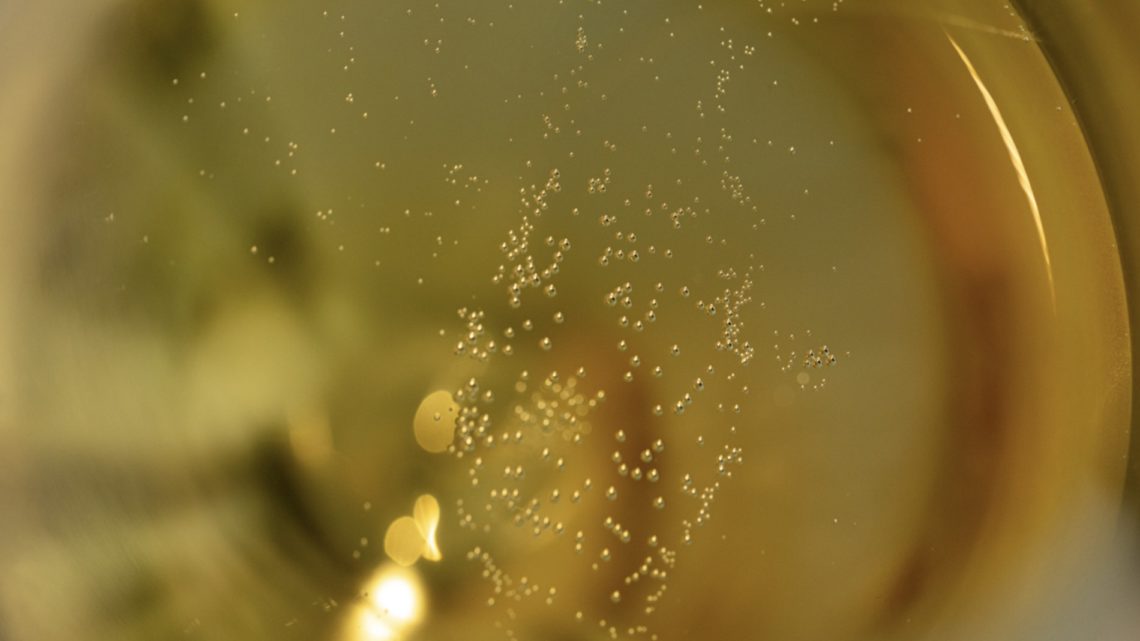
Both vintage and non-vintage Champagne feature that key characteristic of Champagne: it is made with the méthode champenoise, which involves a second fermentation in the bottle to create the magical bubbles. Under the action of yeast, the sugar from the grapes is transformed into alcohol and carbon dioxide, which creates the bubbles in Champagne.
While champagne is traditionally made using a blend of grapes, Chardonnay, Pinot Noir and Pinot Meunier, Taittinger’s non-vintage Champagne style features a higher proportion of Chardonnay compared to other non-vintage Champagnes, which adds finesse and ageing potential given Chardonnay’s high acidity and crispness.
Vintage Champagne: the lord of Champagne
Millésimé is the dom or lord of Champagne wines, made from grapes harvested in a single year.
A Champagne producer only makes a vintage Champagne, or a ‘cuvée millésimée,’ when the grape harvest is of an outstanding quality. The decision on declaring a vintage is an important one and typically rests with the head winemaker’s (Chef de Caves or cellar master) who decides on the wine quality and aging potential.
Once declared, appellation rules dictate that a vintage Champagne must be aged for a minimum of three years on lees, though Taittinger again ages its vintage Champagne for longer, with the extra time in the bottle adding complexity, including toasty and nutty characteristics.
Taittinger hasn’t released a vintage for its Brut Champagne since 2016, such is the high quality demanded by the house (though the good news is that the 2018 vintage will be released in January 2026). The 2016 Taittinger Vintage Brut Champagne was aged for five years on lees and the 50% Chardonnay and 50% Pinot Noir wine features a significant proportion of grapes sourced from Grand Cru vineyards, at around 70% of all the grapes, with the rest sourced from Premier Cru vineyards.
The Comtes de Champagne (Counts of Champagne) is the finest example of a Taittinger Champagne. Taittinger has just released its 2014 vintage, which reveals the nobility of Chardonnay sourced from the five Grand Cru villages of the Côte des Blancs region. After ten years of patient aging, the wine embodies refined freshness, restrained energy, and radiant purity.
Before its release, the Comtes is aged for 10 years on lees. The Blanc de blancs Champagne has significant aging potential, up 20 to 30 years under ideal cellaring conditions. In the words of James Bond in Casino Royale: “I’ll take Taittinger blanc de blancs …. It is the best Champagne in the world.”
But it’s a matter of choice, after all. For those who prefer a hint of colour in their Champagne, the 2014 vintage sits alongside the Comtes de Champagne Rosé 2012, which is made from 70% of Pinot Noir sourced from the Grands Crus from the Montagne de Reims region and 30% Grands Cru Chardonnay grapes from the Côte des Blancs. Legendary ballet dancer and choreographer Rudolf Noureev, said, “When I drink Comtes de Champagne Rosé, I no longer dance, I fly…”
Such is the joy of savouring a fine Champagne.
Say millésimé like the French
If you decide on a vintage Champagne, a quick note on pronouncing the word millésimé, which can be tricky for the uninitiated. Using English sounds, it sounds like ‘Mi-Lay-Si- May’. In French, the letter ‘é’ sounds like ‘ay’. This is important if you want to master the language, as many French verbs end in ‘er’ and important names too, like Taittinger.


