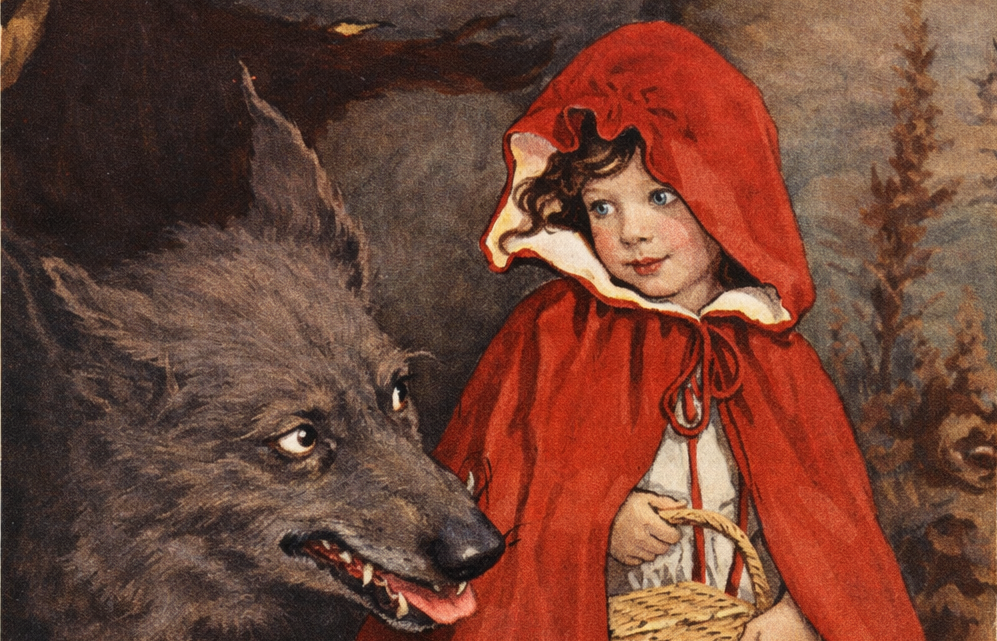
This month, Taittinger’s social media accounts will be delving into the world of folk tales. It’s a chance to revisit two of the genre’s founding names: Charles Perrault in France, followed a century later by the Brothers Grimm in Germany. In both cases, the authors drew upon oral tradition to give weight and layers of meaning to their stories, which have since become foundations of western cultural memory.
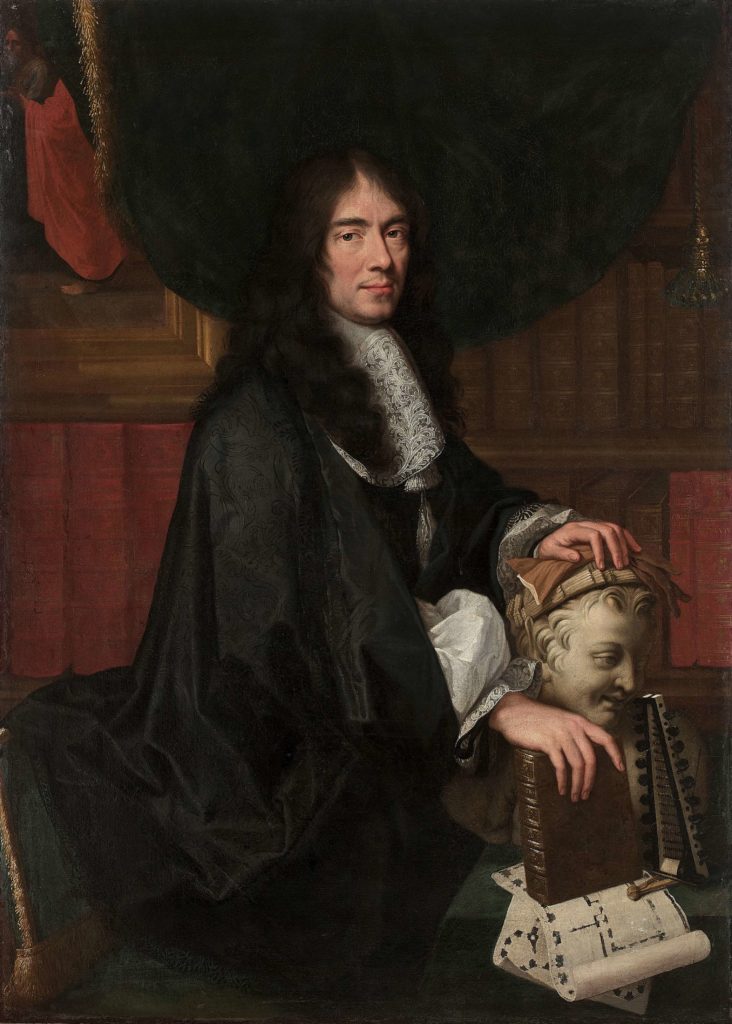
Famed for his collection entitled Mother Goose Tales (1697),which included now-classic titles of children’s literature – such as Little Red Riding Hood, Cinderella, Puss in Boots, Hop-o’My-Thumb and Sleeping Beauty – Charles Perrault belonged to the world of Parisian literary salons and the court of Louis XIV. Contrary to popular belief, Perrault did not invent most of his stories: rather, he gathered folk tales and rewrote them to suit the tastes of aristocratic audiences. In Puss in Boots, for example, shrewdness and loyalty become the keys to social mobility, while Bluebeard portrays conjugal violence and the breaking of restrictions placed on women. Perrault introduces an explicit moral dimension, often expressed in verse at the end of each story, transforming the tale into a tool of social education. This approach proved popular with audiences upon the book’s publication.
A century later, in a fragmented Germany in search of cultural unity, the Brothers Grimm adopted an approach that was more archaeological than literary. Jacob and Wilhelm Grimm were born in Hanau in 1785 and 1786 respectively, into a world of political upheaval. Having trained as lawyers, the brothers left this path behind to pursue their passion for romantic literature, and the language and traditions of Germany. Their work served an ambition: not to entertain or educate a royal court, as Perrault had done, but to preserve the cultural memory of the people, their beliefs and their symbols.

In 1812 they published the first volume of Children’s and Household Tales, followed by a second volume in 1815. While legend recounts that the Brothers Grimm roved the German countryside from 1806 onwards, visiting poor and middle-class homesteads in search of tales, it would appear that in actual fact they welcomed folk storytellers to their salon.
Unlike Perrault, who polished the language and added an explicit moral component, the brothers Grimm reproduced the raw force of the stories, retaining their violence, oral cadence and a certain emotional depth – as demonstrated in the tale of Hansel and Gretel, where two children are abandoned in the forest by a cowed father and a merciless stepmother, who are incapable of meeting their needs. The forest is not a backdrop; it is a trap. The stepmother who urges their abandonment is not just negligent, but murderous. Childhood is not portrayed as an age of innocence, but as a realm where we find ourselves vulnerable and exposed to all manner of upheavals.
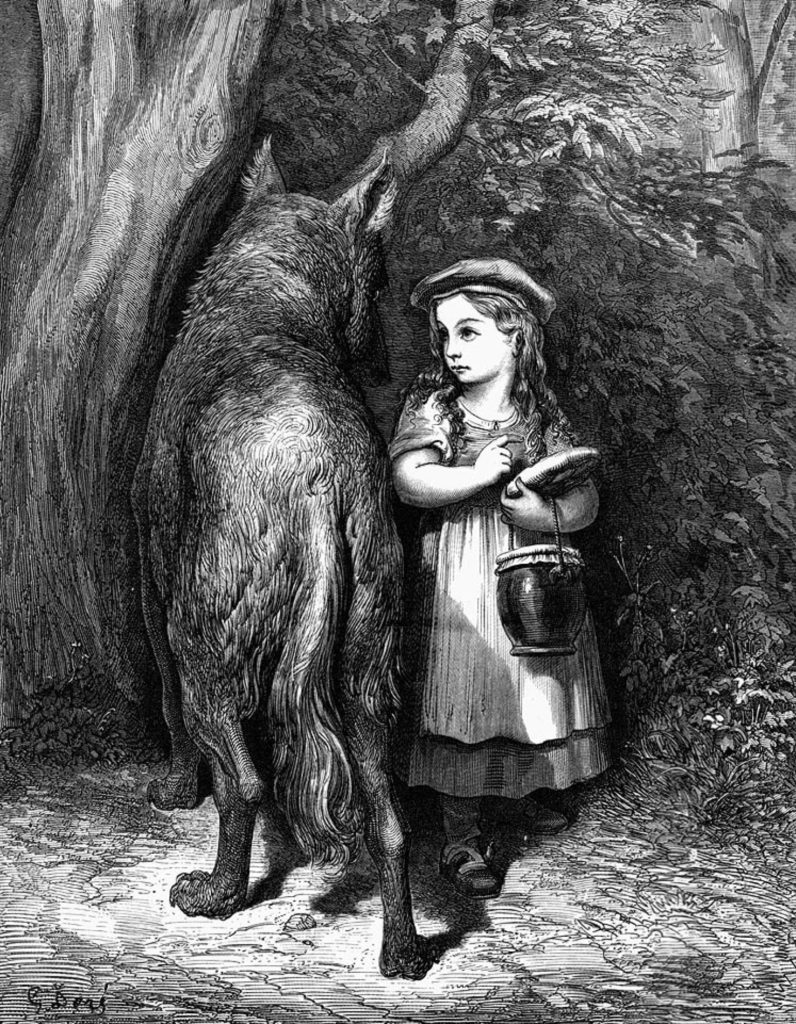
Several of Perrault’s tales were revisited by the Brothers Grimm, and adapted to their own vision. Little Red Riding Hood provides a perfect example of how the same folk legend can be differently portrayed. In Perrault’s version the story is short and cruel: the naïve little girl is devoured by the wolf, with no-one coming to her rescue. The moral of the story warns against naivety, and the dangers of ill-intentioned men. The Grimm’s Fairy Tales version is longer and more narrative: the wolf devours the child, but the hunter shows cunning and courage, and intervenes to save the girl by cutting open the wolf’s belly. This nuance is very telling: Perrault emphasises fatality and a moral lesson, while the Brothers Grimm focus on the act of facing danger and the possibility of escape. While Grimm’s Fairy Tales tell of hunger, abandonment, cloaked sexuality, jealousy and power, they also evoke the possibility of escape, of breaking the spell and transforming a curse into a pathway to freedom. Using archetypal figures – the persecuted young girl, the predator, the magical sidekick and the clever child – they portray symbolic structures that transcend time and culture. Indeed, the brothers were obsessed with preventing cultural erasure, and pursued this vocation beyond the telling of folk tales. They devoted much of their lives to the composition of the Deutsches Wörterbuch, the most significant dictionary of the German language since the 16th century, designed to serve as a “seat” of linguistic and cultural memory.
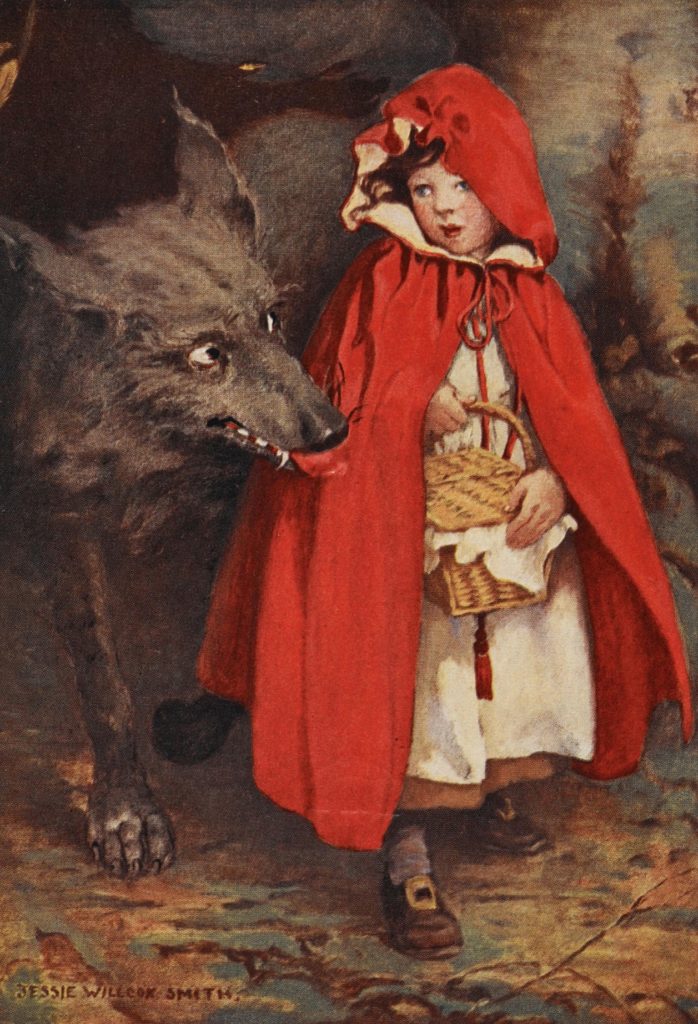
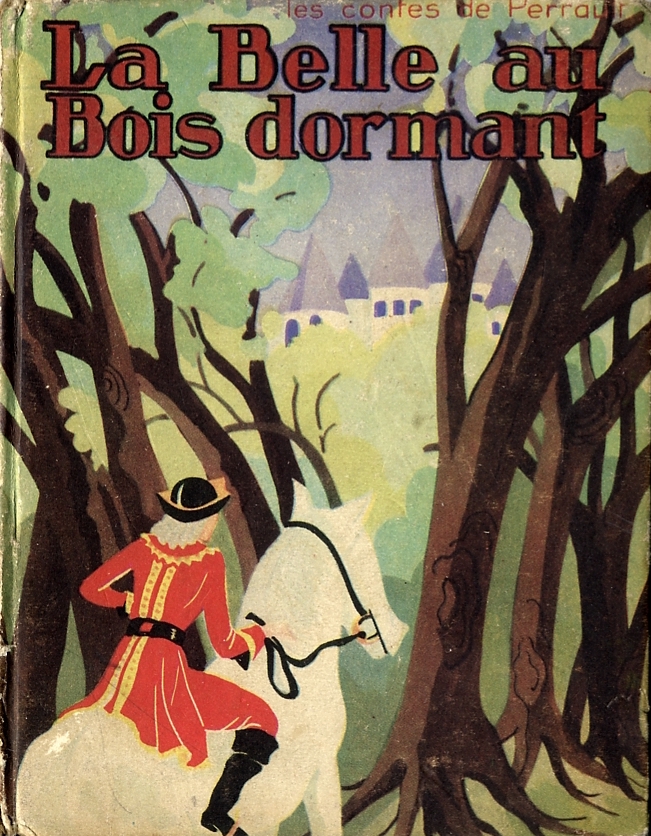
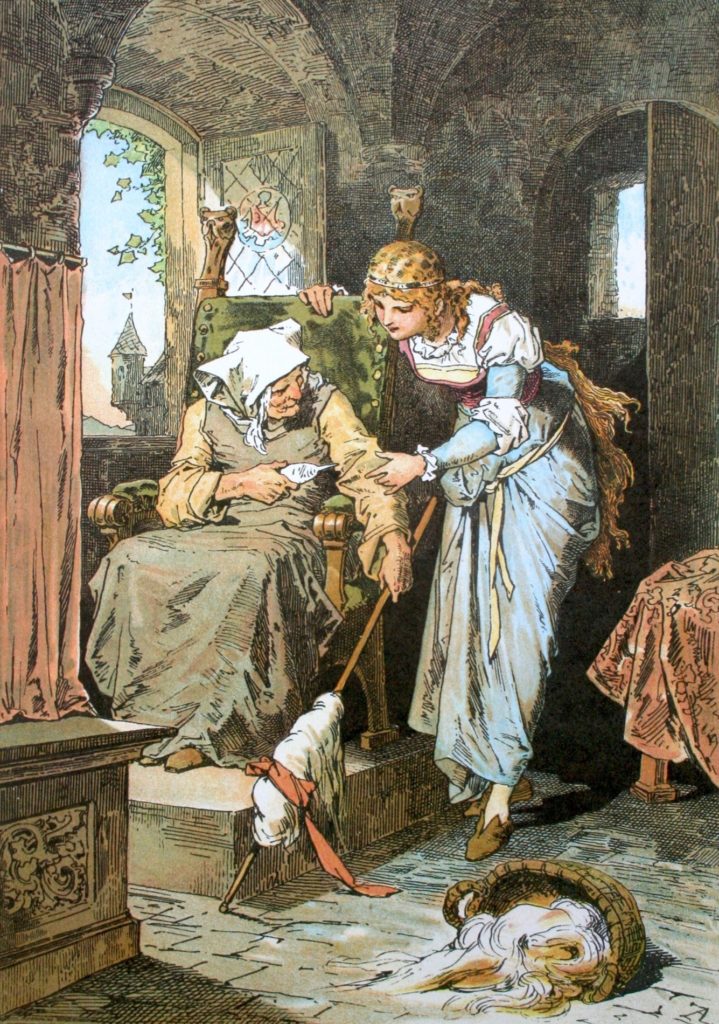
While Perrault enshrined his tales in studied, gilded elegance, the Grimms anchored theirs in primitive darkness. Yet all three held a shared belief: that although these stories were ostensibly for children, they spoke most clearly to adults, expressing sometimes uncomfortable truths about fear, desire, death and transformation.
Centuries later, their legacy remains intact: whether in the form of books, films or performance art, folk tales continue to be adapted to reflect modern issues. Yet behind these reinventions linger the names of Perrault and the Brothers Grimm, like frozen figures lurking in the forest – the silent guardians of our childhood dreams and nightmares.