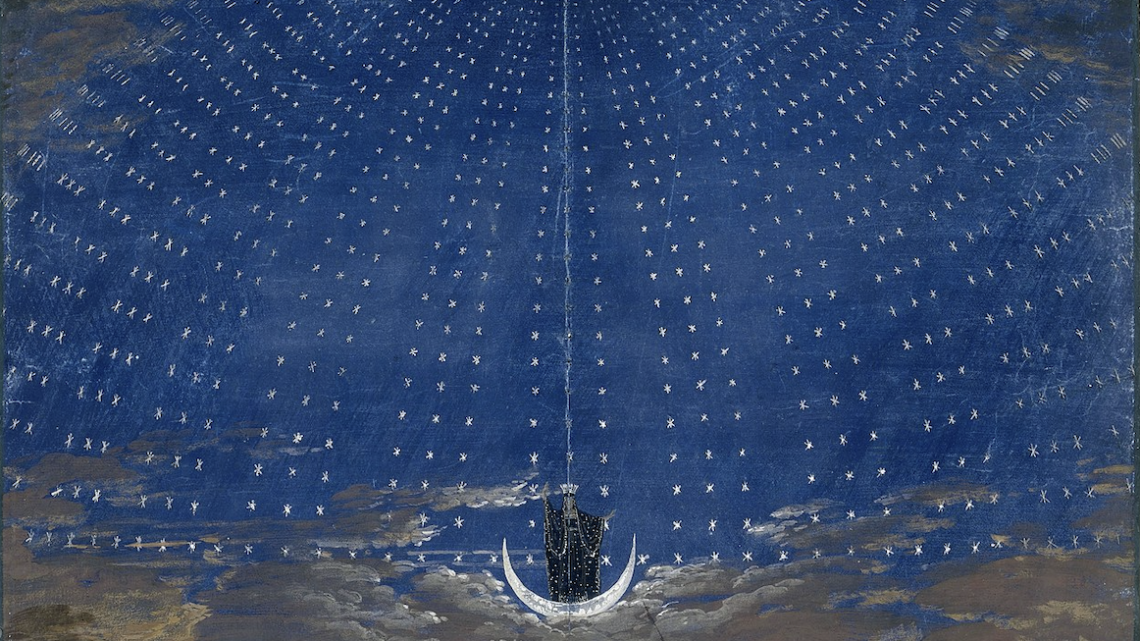
27 January 2026 marks the 270th anniversary of Mozart’s birth. An opportunity to revisit the genesis of “The Magic Flute”, one of his most emblematic operas.
It is one of the most frequently performed operas in the world.
It is the one you recommend to the uninitiated as an introduction to lyric art.
The Magic Flute is endless, as you listen to it, in its ability to wield its subtle magic. Undoubtedly, this is down to its musical brilliance and its fantastic, symbolic plot. Perhaps, too, in Mozart’s final score, it is possible to sense the ardour and genius of a man who had only a few months left to live.
The opportunity of (the end of) a lifetime
It was in March 1791 that The Magic Flute project (originally Die Zauberflöte) emerged.
Mozart is 35 years old, with a mass of masterpieces under his belt, but his health is failing and his pockets are woefully empty. A year earlier, his opera Così fan tutte had been a flop, and commissions from Vienna were drying up (the new Emperor Leopold II disapproved of his Masonic leanings).
The project through which he would rediscover his verve, came to him through his friend and masonry brother, Emanuel Schikaneder.
He was an actor, director, impresario and troupe manager and had just been appointed director of the Theater Auf der Wieden, a popular theatre on the outskirts of Vienna, where he gave pride of place to a popular German-language repertoire. He also had a soft spot for fairytales, which meant spectacular on-set effects, involving live animals, illusions, animated objects, ferocious storms and the like.
In the spring of 1791, he gave Mozart the libretto of The Magic Flute so that he could compose the music.
Mozart began the score. It would be a Singspiel – alternating singing (Sing) and spoken dialogue (Spiel) – and a mix of all musical styles, from scholarly music to popular tunes, to unite both the informed and lay audience.
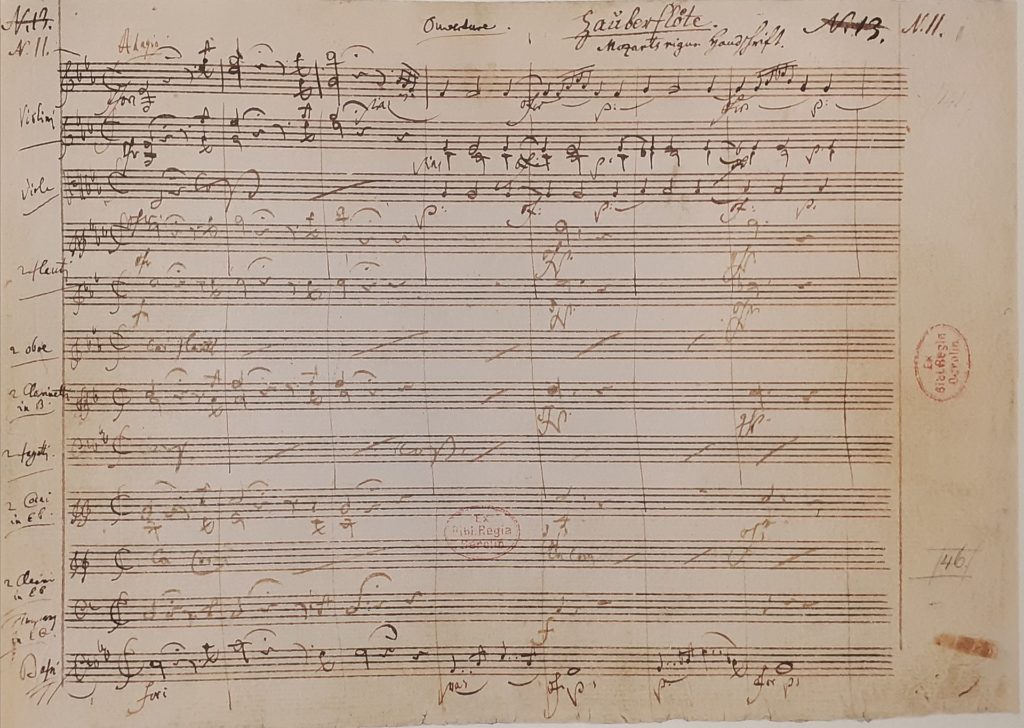
A piecemeal approach and grotesque characters, or a cosmic work and lesson in philosophy?
The libretto of The Magic Flute is disconcerting.
“Some even go so far as to claim that the composer would display less genius if the poet were inclined to show more reason”, the French press later ventured.
Because the text is the amalgamation of several sources of inspiration and several collaborators. Originally, Emanuel Schikaneder was inspired by two fairy tales, Lulu or The Magic Flute and Die klugen Knaben by Christoph Martin Wieland. He then surrounded himself with Carl Ludwig Giesecke (one of the troupe’s actors) to write the dialogues, whilst gathering wise advice from Baron Ignaz von Born (master of Masonic symbolism) and Mozart himself.
As such, behind the apparent extravagance of the plot, there is to be read a tribute to Enlightenment philosophy as well as a number of explicit allusions to Freemasonry. On the latter, just a few keywords in a search engine will suffice to bring up an avalanche of analyses on the symbols hidden in the work. Let us simply note here that the trials the heroes must endure are very clearly inspired by Freemason initiation rites.
More broadly, the work is permeated by an overarching philosophical reflection, on the need to emerge from the “darkness” of ignorance, to move towards knowledge and wisdom, and to enlighten oneself.
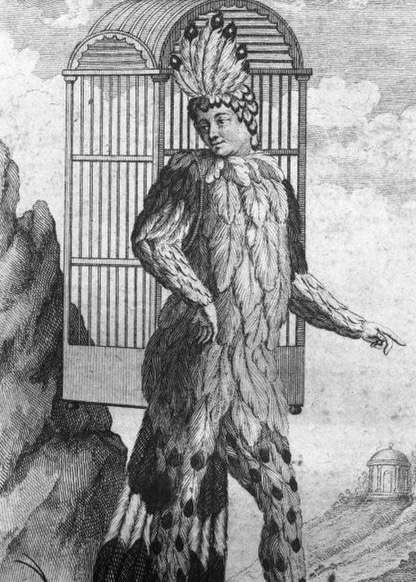
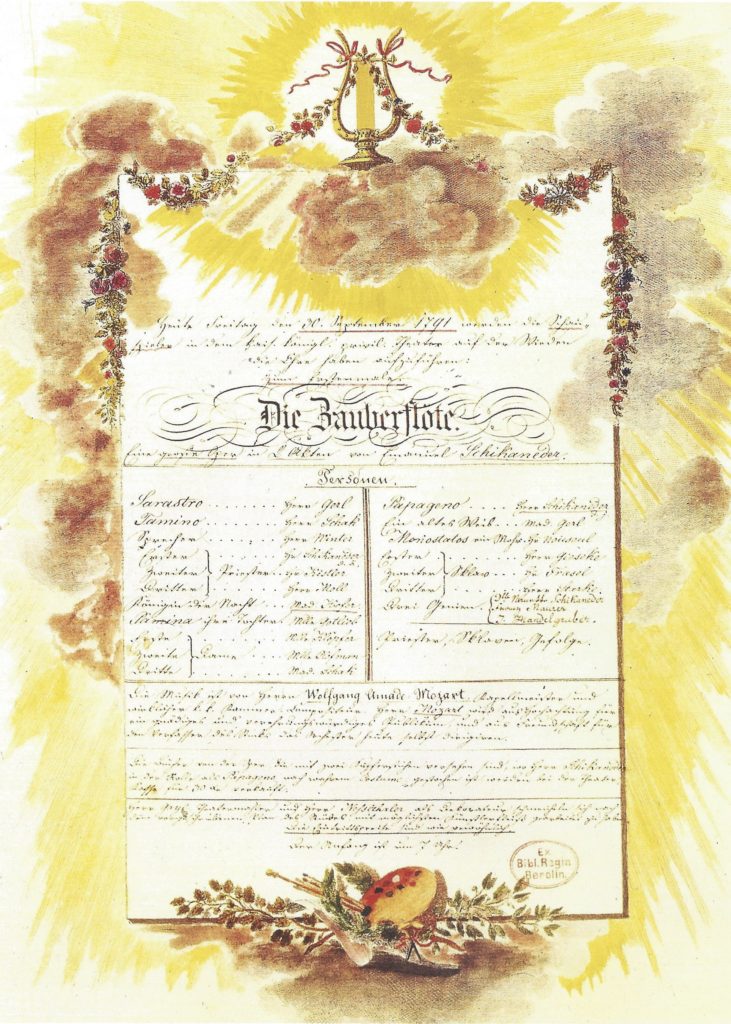
First performances, final days.
It was on the eve of the dress rehearsal that Mozart made the finishing touches to his score.
On 30th September 1791, the work was finally ready to ring out for the first time. The Theater Auf der Wieden is full. A thousand people are waiting for the curtain to open.
That evening, Mozart himself conducted his score from his harpsichord.
It was a phenomenal success.
The composer would go on to conduct some of the ensuing performances, until his health dictated that he take to his bed.
It is said that on his deathbed, his thoughts were still consumed with the show. Hunched over his watch, he would imagine what was happening on stage, murmuring: “Now, the first act begins”, “it’s time for the Queen of the Night aria”.
Exhausted, Mozart finally died on 5th December 1791.
His work remained on the bill at the Theater Auf der Wieden for a year, then travelled internationally, until becoming a staple of operatic repertoires.